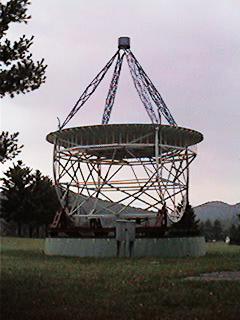
POGO v2.0 - A Physical Optics / Geometrical Optics Reflector Simulator Placeholder
This is a placeholder page for POGO v2.0 content. Future updates may include download links, user guides, sample models, and integration with other tools. Below is a definition of Physical Optics, Geometrical Optics, a comparison of the two, and a mathematical treatise of both methods.
Definition of Physical Optics
Physical Optics (PO) is an approximation method in electromagnetics used to calculate the scattering and radiation from large objects (relative to wavelength) by assuming the incident field induces surface currents on the object, which then radiate to produce the scattered field. It is based on Huygens' principle and Kirchhoff's diffraction theory, treating the surface as a source of secondary waves. PO is particularly useful for high-frequency problems where the wavelength is small compared to the object's dimensions, providing accurate far-field predictions for reflector antennas, radar cross-sections (RCS), and optical systems.
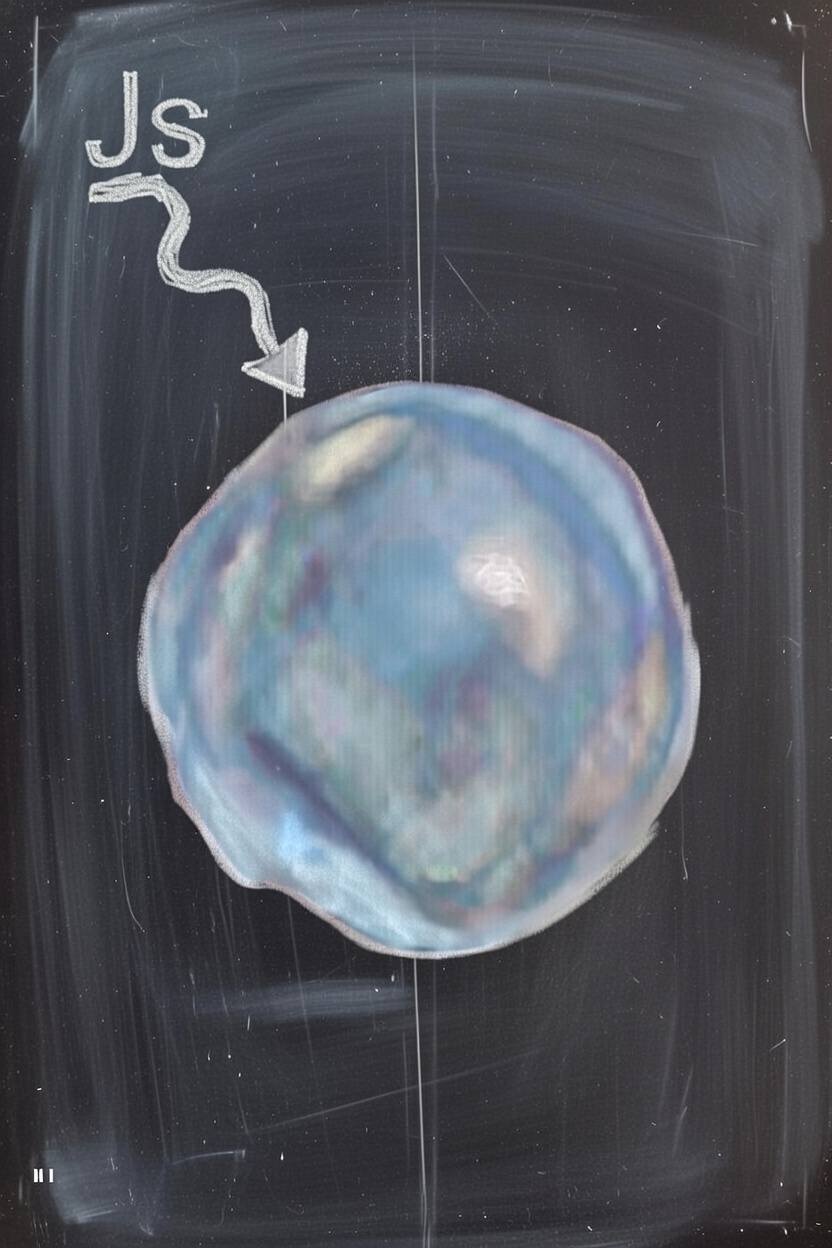
In the above fundamental image, an irregular-shaped current plane is shown with surface current density Js. To compute the radiation pattern, we use Green's functions or Fast Fourier Transforms (FFTs). The far-field electric field E(r) is obtained by integrating the Green's function over the surface:
E(r) = (jωμ / 4π) ∫∫_S Js(r') * G(r, r') dS'
where G(r, r') = exp(-jk|r - r'|) / |r - r'| is the free-space Green's function, k = 2π/λ, and S is the surface. For efficient computation on large surfaces, FFTs can accelerate the convolution in the spectral domain, transforming Js to the Fourier domain, multiplying by the spectral Green's function, and inverse transforming to get the pattern.
Definition of Geometrical Optics
Geometrical Optics (GO), also known as ray optics, is a high-frequency approximation that models electromagnetic waves as rays propagating in straight lines, obeying laws of reflection and refraction (Snell's law). It ignores wave phenomena like diffraction and interference, assuming infinite frequency (λ → 0). GO is effective for analyzing large-scale optical systems, such as lenses, mirrors, and reflector antennas, by tracing ray paths to predict image formation, beam focusing, and illumination patterns.
Comparison of Physical Optics and Geometrical Optics
- Approximations: GO is a ray-based method valid in the limit of short wavelengths, neglecting phase and diffraction. PO incorporates wave nature by using surface currents and integration, capturing diffraction effects better than GO.
- Accuracy: GO is simpler and faster but inaccurate near edges/shadows (no diffraction). PO provides higher fidelity for far-field patterns and sidelobes but is computationally more intensive.
- Applications: GO for initial design of reflectors (ray tracing for focus); PO for detailed analysis (radiation patterns, spillover). Hybrids like GO-PO combine them for complex systems.
- Limitations: GO fails for small structures (comparable to λ); PO assumes large, smooth surfaces and neglects multiple reflections unless extended (e.g., PTD for edges).
Mathematical Treatise of Physical Optics
PO derives from Maxwell's equations under high-frequency approximation. For a conducting surface S illuminated by incident field Ei, the induced surface current Js ≈ 2n × Hi (tangential magnetic field), where n is the normal.
The scattered field Es at observation point r is:
Es(r) = - (j k Z0 / 4π) ∫∫_S [n' × (n' × Js(r')) + (1/k^2) ∇s' (∇s' · Js(r'))] * (exp(-j k R)/R) dS'
where R = |r - r'|, Z0 is free-space impedance, ∇s' is surface gradient. This vector form accounts for polarization. For far-field, it simplifies to radiation integrals solvable via stationary phase or FFTs for efficiency.
Mathematical Treatise of Geometrical Optics
GO uses eikonal equation from wave equation ∇²ψ + k²ψ = 0, approximating ψ ≈ A exp(j k S), leading to |∇S| = 1 (eikonal) for phase S and transport for amplitude A.
For reflection on a surface, the ray direction changes per Snell's law: i_r = i_i - 2(n · i_i)n, where i_i/r are incident/reflected unit vectors.
In reflector antennas, parabolic shape ensures rays from focus reflect parallel: surface z = x² + y² / (4f), with focal length f. Field amplitude follows inverse square law along ray tubes, but no phase/diffraction.