jMer — The Monster from Nowhere
One of the problems we have when we stitch simulators together is how to get from the frequency domain to the time domain. Just as often we go the other way: start in the time domain, apply techniques such as vector fitting or Levy's method to move to the frequency domain, and then come back to the time domain again. In fact there are a whole bunch of ways you can do it.
The trouble with a "fully generalised" vector fit is simply that it never is fully generalised, so with methods such as Gustavsen's you end up with brittle edge cases. It is still an active research area, and there is no one size that fits all. But it is often the implementation that separates a solid product from one that is useful 90% of the time.
Scope: Do Less, but Do It Well
Then there is the scope of the product. We've seen excellent projects like LINC2 for power-amplifier design at a reasonable price — it doesn't try to do everything, but what it does, it does well. At the same time we saw Compact grow into Super-Compact, while EEsof — started by a former Compact engineer — gave us Touchstone, whose file format is still how the industry swaps S-parameters. Compact was later bought by Ansoft, and its tools fed into Ansoft Designer. Sadly, simple and affordable designer tools like these were gradually absorbed into large design packages costing tens of thousands of dollars.
People would perhaps be shocked that transistors were just not that important in the '60s, and that hybrid valve/transistor TVs were still being made into the 1970s. They might also be shocked that AD149 germanium TO-3 transistors, with excellent audio quality, are still rolling off production lines in Belgium — a product of the Mullard → Newmarket germanium line that carried on through the 1980s, when many magazine articles were still using them. But I digress.
Why Design Still Needs Simulation — and Judgement
When I went on to use what was then Tanner Tools for analogue microelectronics, it was still the case that you SPICEd a whole analogue chip — and, if you had time, you actually built it before you taped it out. That might seem quaint by today's standards, but it really isn't. Once you cross over into product engineering it's amazing how often devices simply don't meet the marketing spec sheets, and I have more than a few horror stories from the manufacturing floor about why that is. In some cases manufacturers are still picking devices for edge cases — very much the blue-spot / red-spot transistors, and, for those who remember, the difference between the Mullard OC44 and OC45.
I've written before about transistors being designed into circuits with imaginary beta characteristics, simply because the designers and the management team have long since lost any idea of how a complex chip is actually designed — and that holds true for a product, too. The humble BC548 has a beta of anywhere from about 100 to 800, and you don't just pick a number in the middle. Designing a chip like that is a sure-fire way to make a lot of mistakes. Many will rely on the PDK, but even that is a bad deal: it's a naturally "wobbly" device.
jMer is taking shape to take some of that guesswork out. You still need to know how to design. As my old professor, D. R. Edwards of Portsmouth, once said while I was at the Maritime College: "You'd be amazed how much equipment out there is poorly designed." Anyway, let's not go down that road any further.
A Quick Look: a 2.45 GHz Patch, End to End
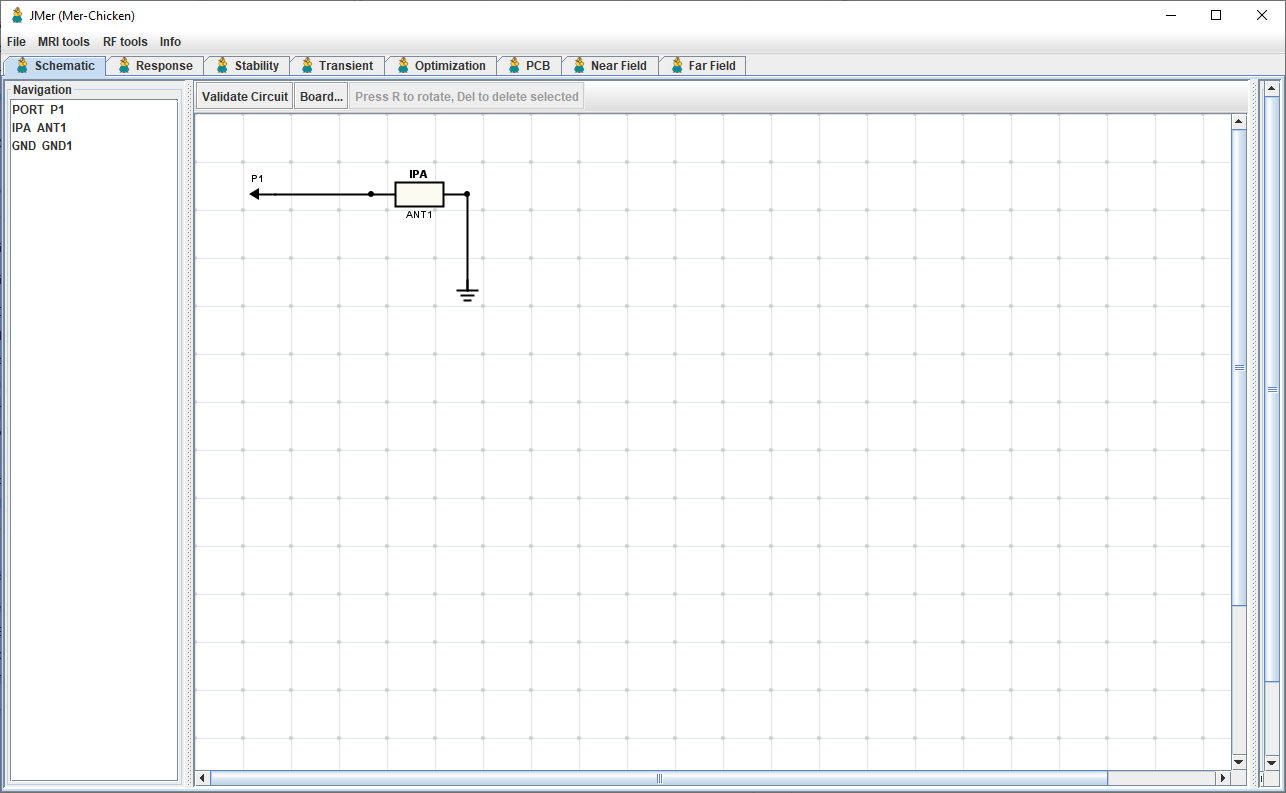
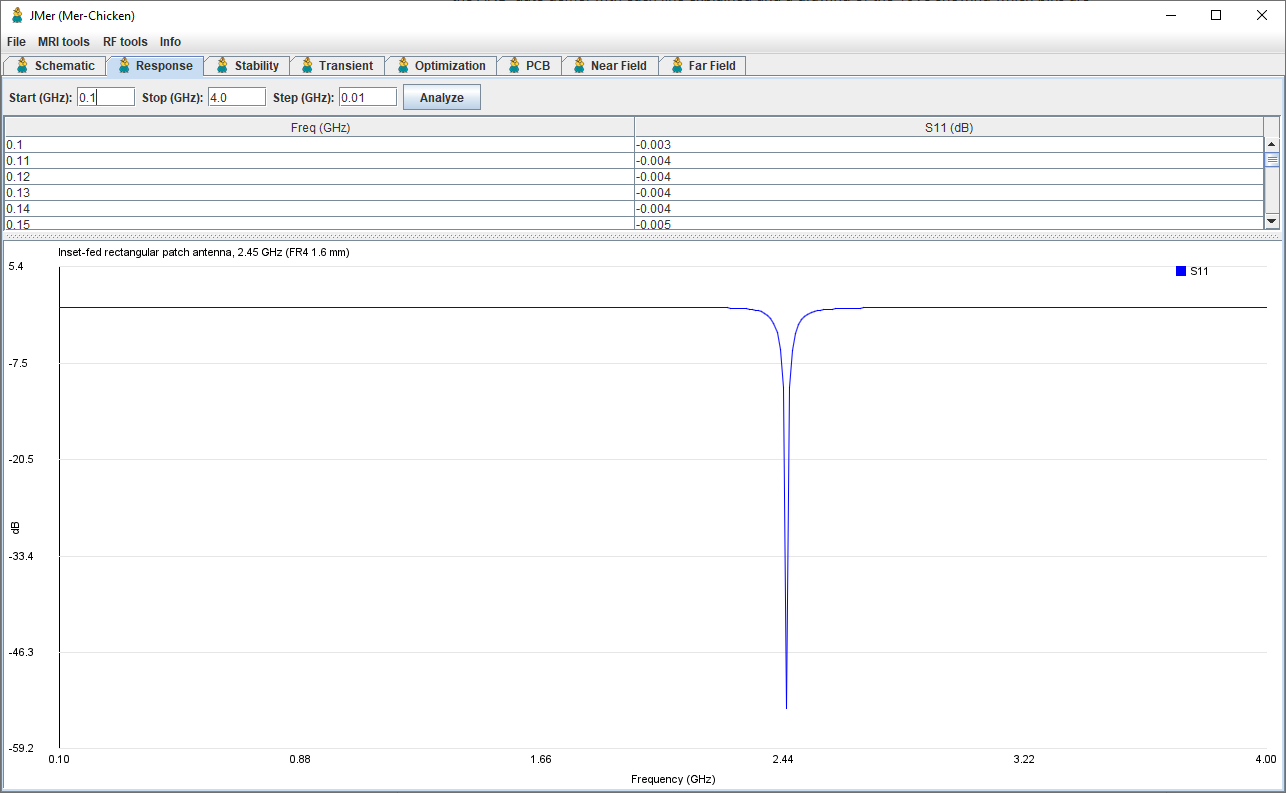
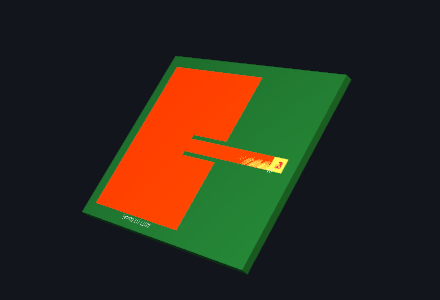
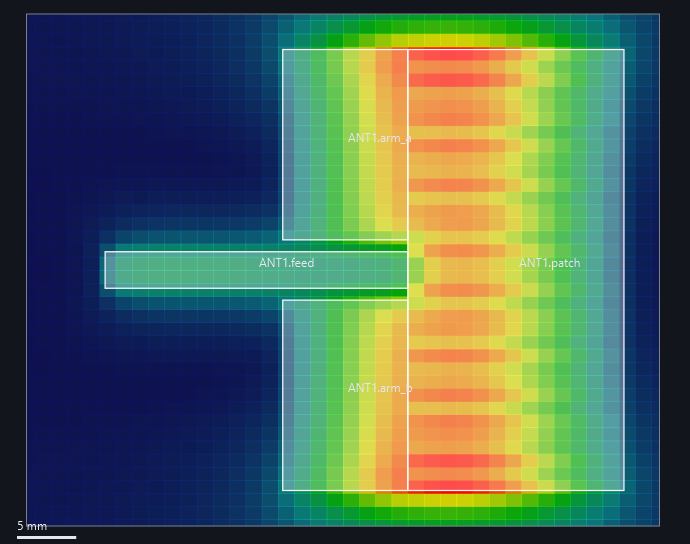
The screenshots on this page all follow one small design — an inset-fed rectangular patch antenna for 2.45 GHz on 1.6 mm FR4 — from the schematic above through to its match, its board and the fields above it.
What a Tool Like This Needs
There is a range of features that any tool of this kind needs. These are just a few of the ones jMer already has up and running under the hood:
- Frequency response
- Transient response
- Far-field response
- Board layout and export
- Signal-integrity analysis and fixes
- Antenna auto-builders
- Specialised industry tools (no — you'll have to wait)
- Load pull for Doherty amplifiers
- Several parameter optimisers
- Export to a full mixed-signal suite (tōtara)
- Impedance-matching tools
- Nonlinear spur analysis (SDR parameters such as SFDR)
- A fully cloud-free, secure design environment that does not phone home
- The couple of native libraries that need JNA access are built static (no dependencies), for both Linux and Windows
Get Involved
I hope you'll watch, express interest and suggest improvements — please feel free to use the contact form.